The "Nice" Illusion: Decoding the Hidden Scripts of Over-Functioning in Obsession (2026)
The breakout box-office success of Curry Barker’s psychological horror thriller Obsession has done something remarkable: it has turned the classic rom-com "hopeless romantic" setup into a terrifying, edge-of-your-seat cautionary tale.
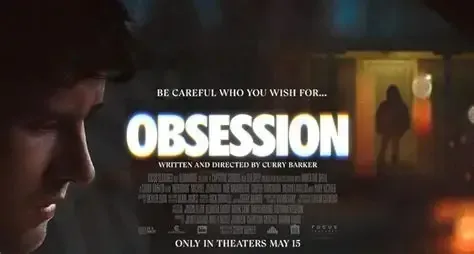
The film follows Barron (Bear), a shy, seemingly reliable guy who has spent years pining for his childhood crush from the safety of the "friend zone." He presents himself as the ultimate safe choice. He doesn’t want to cross boundaries, he respects her space, while he quietly builds his life around being supportive. But when a supernatural shortcut grants him the power to force Nikki's affection, the mask completely slips. What follows isn't a love story; it is a nightmare.
Obsession (2026) works because it taps into a deep, uncomfortable cultural truth. For decades, traditional Hollywood cinema has conditioned us to root for the misunderstood, overly patient "Nice Guy." The audience is trained to pity him, to view his hyper-focus as pure devotion, & to completely overlook the toxic underbelly hiding just beneath the surface: the quiet jealousy, the covert control, & the passive-aggressive sabotage of a partner's independent success.
But here is the foundational reality we must address: "Niceness" is not an inherent personality trait; it is an attachment survival strategy. To understand how this strategy plays out, we have to look past the polite behaviors & diagnose how the "Nice Guy" blueprint operates across the three insecure attachment styles.
The "Nice Guy" Blueprint Across the Styles
The Anxious Preoccupied Nice Guy (Preventative Indispensability) 🌊
For the anxious-preoccupied style, being the "Nice Guy" is a preventative insurance policy against abandonment. He is the ultimate over-giver, the constant helper, & a perpetual victim of the "friend zone."
- The Intent: Preventative. He is trying to build a foundation where it becomes impossible for the partner to leave by making himself entirely indispensable.
- The Subconscious Expectation: "Because I am completely abandoning my own boundaries, needs, & life to fix yours, you owe me total, unthrottled emotional proximity. You must validate my worth & never pull away."
- The Protest Behavior: Hyper-activation & Guilt-Tripping. The moment a partner sets a boundary or doesn't reciprocate his intensity, his internal system panics. His protest behavior shifts from gentle support to frantic over-communication, followed quickly by weaponized guilt, "Look at everything I’ve sacrificed for you! How can you treat me this way when I give you my everything?"
The Dismissive Avoidant Nice Guy (Defensive Peacekeeping) 🏝️
The dismissive avoidant "Nice Guy" is the one everyone praises for being incredibly low-maintenance, easygoing, & agreeable. He rarely starts arguments & nods along to keep the peace.
- The Intent: Defensive. He uses his compliance to actively avoid conflict, heavy emotions, & vulnerability. All of which feel deeply unsafe to his system.
- The Subconscious Expectation: "Because I am being perfectly easygoing & demanding absolutely nothing from you, I am entitled to total safety from emotional depth. You have no right to ask me for vulnerability or true intimacy."
- The Protest Behavior: Deactivation & The Deep Freeze. The second a partner asks him to go deeper or address a real emotional issue; he views it as a direct violation of his silent contract. His protest behavior isn't loud; it is a silent, icy withdrawal. He will stonewall, emotionally detach, or physically exit the space, freezing the partner out entirely to protect his baseline.
The Fearful Avoidant Nice Guy (Reactive Scorekeeping) 🌦️
This archetype is the most volatile & confusing for a partner because the fearful avoidant operates from a place of intense hyper-vigilance & a total lack of intrinsic trust.
- The Intent: Reactive. He starts out matching the extreme intensity of the anxious style through rescuing and hyper-attuning, but his system is constantly waiting for the other shoe to drop.
- The Subconscious Expectation: "I am taking a massive emotional risk by devoting myself to you. Therefore, you must perfectly read my mind, anticipate my needs, & give me absolute safety without me ever having to ask for it."
- The Protest Behavior: The Volatile Whiplash. Because he is running a silent, hyper-vigilant scoreboard in his head, his protest behavior is explosive. The moment he perceives a deficit in reciprocity, the doting caretaker vanishes & he reactively lashes out with deep, stored resentment to punish his partner. Then, the moment the partner pulls away in shock, his own abandonment anxiety triggers, causing him to violently flip back into desperate, pleading helper mode.
The Female Mirror: The Same Covert Contract 🪞
Whether male or female, the internal architecture is identical: both are running a covert contract that uses over-functioning or casual compliance as a currency to buy safety, completely bypassing the risks of authentic connection.While the "Nice Guy" label dominates pop culture, women frequently utilize the exact same underlying attachment mechanics, though it is rarely recognized because they wear different social masks.
The Anxious Preoccupied "Good Girl" (The Over-Functioner) 🚣
An anxious preoccupied woman will often fall into the "Good Girl" trap of vying for what modern dating culture calls the performative "wife material" status. She builds a high-maintenance beacon of perfectionism, orchestrating, managing, & rescuing her partner's life to buy safety. Her covert contract reads: "If I anticipate your every need, manage your household, & execute perfection, you are obligated to give me the total emotional proximity & validation I crave." The moment that validation drops, her protest behavior flips into intense hyper-activation & weaponized exhaustion.
The Dismissive Avoidant "One of the Guys" (The Defensive Peacekeeper) 🏖️
Conversely, a dismissive avoidant woman steps into the "One of the Guys" or the ultimate "cool girl" archetype. Her strategy is defensive under-functioning; she strips away her own needs, demands absolutely nothing, and prides herself on having zero emotional expectations. Her covert contract reads: "If I remain completely low maintenance, never initiate drama, and act easier to be around than any other woman, you will eventually choose me & you will never demand true, messy emotional depth or vulnerability from me." When pushed for intimacy, her protest behavior is a total deactivation into the deep freeze much like her male counterpart.
The Fearful Avoidant "Ride or Die" (The Volatile Rescuer) 🌪️
Because she carries traits of both sides, the fearful avoidant woman manifests as the "Ride or Die" companion. She initially enters the dynamic with intense, hyper-attuned devotion, positioning herself as your fiercest protector, confidante, & partner-in-crime. Her covert contract reads: "I am taking a massive emotional risk by being your ultimate defender. In exchange, you must perfectly read my mind & provide absolute safety without me ever having to lower my guard." Because she runs a silent scoreboard, her protest behavior is pure emotional whiplash, fiercely punishing her partner with explosive resentment the moment she senses a deficit in reciprocity, only to desperately pull them back when she fears the bridge is actually burning down.
Drop Anchor & Reflect ⚓
Every single one of these archetypes is running a tightly wound survival script designed to gain control or safety at the expense of authentic connection. True intimacy requires boundaries, truth, & the courage to show up fully seen. Intensity, over-functioning, & covert contracts are simply manipulation & insecurity wearing a polite mask.
Now that you see the hidden blueprints behind the behavior, take a closer look at the screen and into your own life.
Which script is Bear running—and more importantly, do you find your own relationships trapped in the subtle machinery of the "Nice" illusion?