Shovels, Pails & Abandoned Sails: Mapping the Seascape of My Childhood
I was trying to survive a deep-sea environment with tools made for a sandbox. Except for that anchor. But I kept it stashed away because, to me, to be "anchored" was to be trapped & floating seemed like a much better option.
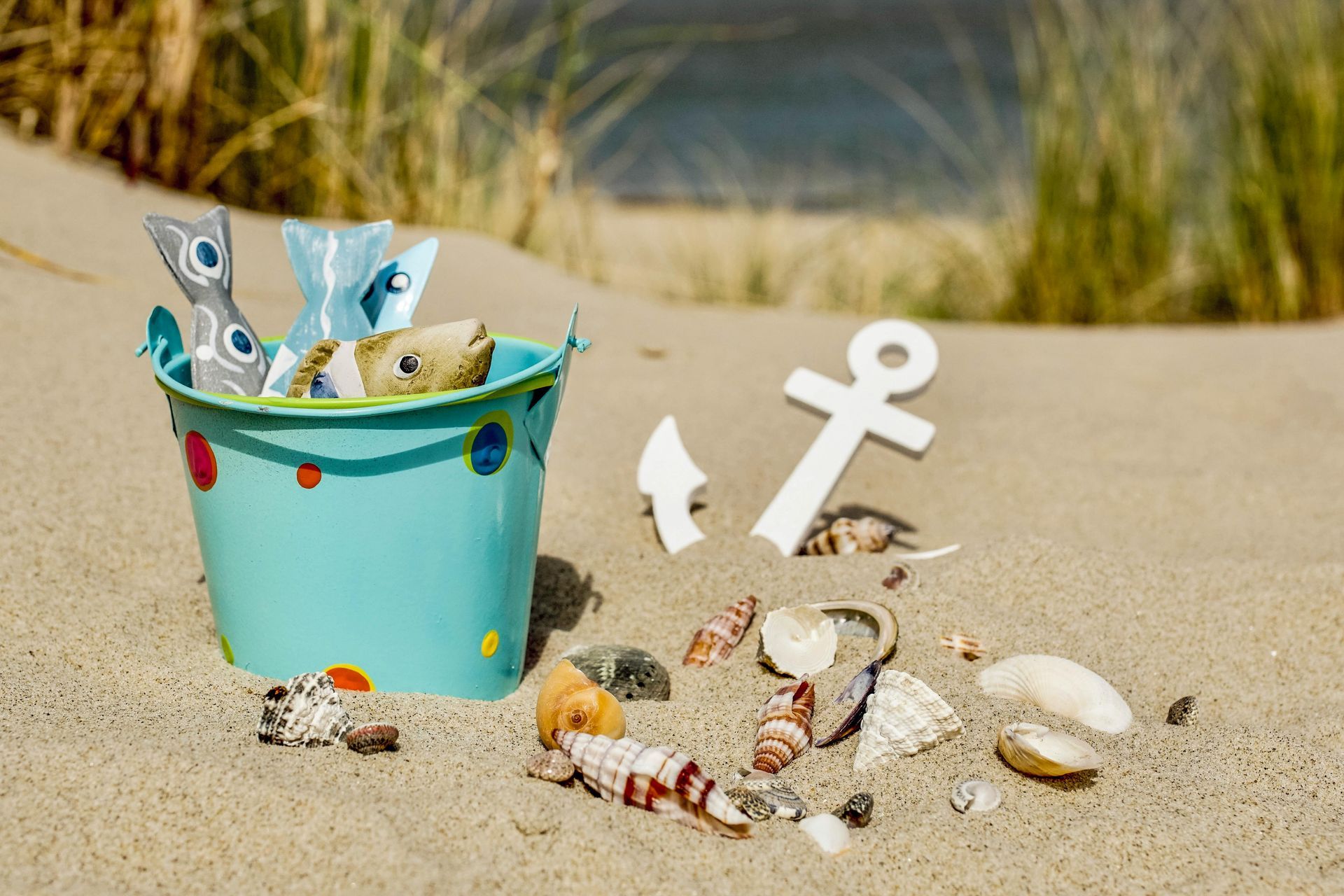
In a pile of flimsy plastic shovels & buckets designed to break at the first sign of a wave, there was one thing that didn't belong: a white anchor. It was the only thing in my childhood kit that was actually designed to hold fast. However, I didn’t actually know that at the time.
I spent decades of my life adrift, tossed by the waves, barely weathering the storms, & clinging to every partner like a life raft—never realizing that life rafts were only meant for emergencies. They aren't a home, & they're certainly not a safe harbor. I was still adrift at sea, now just sharing a sinking ship with someone equally as lost as I was.
Let me fully introduce myself: I am a Fearful-Avoidant (Disorganized) attachment style in recovery, & this is the sea shanty of how I traded my flimsy plastic shovel for a heavy iron anchor. How I finally built a safe harbor where I can dock my ship & enjoy the view, even with storms on the horizon.
Ironically, I never even went to the beach as a child; it took me until I was 30 to even see the ocean. I never learned how to swim. Even now, I jokingly refer to my swimming style as "prolonging the inevitable," not knowing how true that would be - I would have to flail-kick, swallow a little water, & be fully submerged - before realizing I could SWIM without the need for a life raft to keep me afloat.
My childhood was fraught with physical abuse, poverty & neglect. My mother, the "Captain" of our seven-sibling vessel, worked numerous jobs to keep us afloat - even then, the outcome was akin to a piece of driftwood being tossed about the ocean, waiting for a rescue. There were many days and nights where we were left to fend for ourselves. However, this was not uncommon in the 80's and 90's. Five children, all roughly one to two years apart in age, fought viciously for the role of captain in her absence. But, when she was on deck, the weather was unpredictable. We each got a different variation of the storm, & none of us were given a map. My version was like a raging thunderstorm in the liquid black of midnight. I could feel the brittle ship being tossed by the waves under my feet, the flashes of lightning only providing glimpses of what was to come & the thunder always crashing in my ears. It was a landscape of rage & unpredictability where "staying small" was the only navigation available. When the thunderstorm (i.e., my mother) raged it was either 'ALL HANDS-ON DECK' or 'HIT THE DECK' depending on the intensity of the storm. Some days it was a Category 5 hurricane, other days, the sun peaked through, but the heavy storm clouds always marred the sky. When she passed away in 2019, I remember listening to my siblings share stories amongst themselves, and had this not occurred during her funeral, I would have guessed they were reminiscing about a stranger.
The combination of maternal gatekeeping, character assassination and parental alienation acted as tsunami that kept my father at bay. His intermittent presence further galvanized the belief that I was 'betrayed & abandoned' unless I was 'perfect' or, in short, someone else. Growing up, I achieved my 'sea-legs' (i.e., safety) through enmeshment & profound codependency. Hypervigilance became the sonar that allowed me to anticipate needs & predict moods through the slightest changes in the forecast. If she was okay, then I, in turn was also okay. This resulted in enmeshment, an inability to differentiate & a profound codependency that hijacked my sense of identity well into my adulthood. Love meant being useful, acting like a life raft for someone else, even if that meant drowning myself. Ironically, I used to take great pride in my ability to shapeshift - not realizing this was a survival strategy from childhood. I was who my mother needed me to be in order to stay SAFE. I was who my father needed me to be in order to stay CLOSE. This created a perfect storm that ravaged my ability to form healthy relationships, resulting in the disorganized attachment strategy: the push / pull of both wanting love and fearing love simultaneously. (Go away, please come back.)
When I was deactivated, I could rule the world, sail the 7 Seas & accomplish anything. I could set (very hard) boundaries & accomplish goals. I was the best version of myself, SINGLE. However, with a partner, my anxious side would become activated. I would lose myself in their needs and identity. Zero boundaries, zero needs and every emotion or protest pushed beneath the surface. Picture holding a beachball under water ... it's a struggle, but it will resurface. The cycle of activation and deactivation acts as a way to counterbalance or regain control. A familiar siren's song that I was unable to resist. I always thought I was crazy, until I studied attachment theory, codependency and childhood trauma during my time as a therapist in order to help patients suffering from CPTSD. I had many "A-HA" moments as the pieces started clicking together. There were enough anger, tears and sadness to fill more than a bucket.
For a long time, I thought the goal was to become a world-class swimmer—to finally be 'strong enough' to handle any storm that came my way. But the 2.0 version of me knows better. I don’t need to be an Olympic swimmer; I just need to stop choosing to sail on brittle ships.
Today, I’m not in the liquid black of midnight. I’m in the fresh air of a Pittsburgh January, with the window open and a map I’ve spent years drawing myself. I still have that white anchor from my childhood kit, but I’ve finally learned what it’s for: it’s not to trap me, but to remind me that I am the one who decides where we stay and when it’s time to move.
If you’ve been prolonging the inevitable, tired of treading water in someone else’s storm, maybe it’s time to stop swimming and start anchoring. The water is shallower than you think.